
How Sex Addiction Recovery Uses Live Support Groups

The following is adapted from an article from Scott Brassart,  Director of Online Education for both addicts and partners. He is also involved in the creation, production, and dissemination of online information, treatment manuals, books and workbooks, and other written materials. Additionally, he teaches the Sex Addiction, Porn Addiction, and Healthy Intimacy workgroups.

What Is a Sex Addiction Treatment Program?

A sex addiction treatment program is a structured approach to help address compulsive sexual behaviors that have created problems in your life. These programs typically include professional evaluation, individual therapy, and some form of group support to build accountability.

Treatment may happen in a residential setting, where you live at a facility for several weeks, or on an outpatient basis, where you continue daily life while attending scheduled sessions. Many programs now incorporate virtual components, making expert care accessible regardless of your location.

The goal is not just to stop problematic behaviors but to understand what drives them. Programs often address underlying issues like trauma, attachment difficulties, and emotional regulation challenges that fuel addictive patterns.

Why Do Treatment Programs Include Live Groups?

Recovery from sex addiction is rarely a solo journey. Live support groups bring together people facing similar challenges, creating a space where you can speak openly without judgment. This peer connection helps break the isolation that often accompanies addiction.

Group settings also allow you to learn from others. Hearing how someone else handled a triggering situation or worked through a difficult week gives you practical strategies you might not discover in one-on-one therapy.

The real-time aspect matters, too. Unlike pre-recorded content or message boards, live groups require you to show up at a scheduled time. This builds structure and accountability into your week, both of which support long-term recovery.

How Do Live Groups Work in Practice?

Live in-person or online groups typically meet on a regular basis at one location or via video conferencing platforms like Zoom. A trained facilitator or written format guides the session, keeping discussions focused and ensuring everyone has space to participate. Sessions typically last anywhere from one to two hours, depending on the program.

Most groups follow a path that aids in identifying addictive patterns, understanding triggers, building healthy coping skills, and developing a relapse prevention plan.

Participants agree to confidentiality guidelines before joining. What gets shared in the group stays in the group. This creates the safety needed for honest conversation about topics that feel difficult to discuss elsewhere.

What Happens When You Combine Individual Therapy with Online Groups?

Individual therapy and group support serve different purposes, and combining them creates a more complete recovery experience. In individual therapy, you work through personal history, trauma, and the specific thought patterns that drive your behavior. Groups give you a place to practice what you’re learning with real people in real time.

Therapists often recommend group participation as an adjunct to individual sessions. The group becomes a testing ground for new skills: setting boundaries, expressing emotions, asking for help. You also receive feedback from peers who notice things you might miss about yourself.

This approach addresses both the clinical and social dimensions of addiction. You get expert guidance for your specific situation while building a network of people committed to the same recovery goals.

What Should You Look for in an Online Group?

When evaluating programs, start with the format of the group. Try several meetings and then decide which one you feel will be most helpful.

Look at the structure and duration of the workgroup. Give yourself enough time to move beyond surface-level discussion into meaningful work. Programs that offer multiple levels or follow-up options can support your growth over months or years.

Consider also whether the program addresses your specific situation. Some groups focus on men dealing with sex or porn addiction, others on relationships, processing trauma, and still others on couples working to rebuild trust together. Finding the right fit increases the likelihood you’ll stay engaged.

What Are the Benefits of Virtual Groups Over In-Person Meetings?

Virtual groups remove geographic barriers. You can participate in a specialized program regardless of whether one exists in your city. For people in rural areas or those with limited local resources, online access can mean the difference between getting help and going without.

Scheduling flexibility is another advantage. Many online groups meet during evening hours or on weekends, making it easier to attend without missing work. You also save travel time, which makes consistent attendance more realistic over the long term.

Some people find virtual settings less intimidating than walking into a physical meeting room. The screen provides a degree of psychological distance that can help you open up, especially in early sessions when trust is still forming.

What Role Does Peer Support Play in Recovery?

Peer support helps normalize your experience. When you hear others describe patterns similar to your own, it reduces the shame that often keeps addiction hidden. You realize you’re not alone, and that recognition itself can be healing.

Groups also build accountability. Knowing you’ll report back to others next week motivates you to follow through on commitments you’ve made. This social structure reinforces the habits and behaviors necessary for lasting change. Over time, peer relationships often deepen. Many people form connections that continue outside the formal group setting. Some stay in touch with their original workgroup members years after completing the program.
Did You Know

July 6, 2026 marks the thirtieth anniversary of the inauguration of the SCA online meetings and, stemming from them, the Online Intergroup.

In fact, this month sees Online Intergroup celebrating all of:

  • 30 years of online meetings.
  • 15 years of telephone meetings.
  • 5 plus years of their own, independent website.

The Online Intergroup is the original provider of electronic meetings to the SCA Fellowship, they provide online and telephone meetings, and do not hold any in-person or hybrid meetings.

The Online Intergroup’s online meetings are traditional message board meetings, also known as discussion forums, where members post shares and other members can reply later, where allowed. They are not chat rooms, with real time interactions between participants, but asynchronous platforms.

The Topic Meeting, our oldest meeting, began on July 6, 1996. Organized by John F. of New York and later Paris, the online meetings grew out of the establishment of the main SCA website, SCA-Recovery.org. The first poster was SCA Co-founder Frank H. of New York. He suggested that the new online meeting should have a topic, and the meeting became the Online Topic Meeting. Typically, the meeting has had two topics per month over the years, but we currently have a monthly topic. This month’s topic is a golden oldie, Step One. We are now posting an extract from recovery literature on the topic for members to reflect on as well. Members share on the topic for themselves, and are asked not to comment on what others have said.

The Feedback Meeting, for more general sharing on SCA-related subjects, soon followed the start of the Topic Meeting, and allows feedback from other members. Its formal name is the “Feedback for Recovery Meeting.” It quickly became and remains the most visited online meeting. Feedback is not advice or criticism. It can simply mean identifying with the poster, sharing words of encouragement, or relaying program slogans or tools that have helped the responder. Through these discussions, we deepen our understanding of the subjects raised in order to further our recovery.

The Acting In Meeting is our newest meeting, some 5 years old, and is where members can share experience, strength and hope on subjects relating to acting-in behaviors connected with sexual compulsion as they choose. Again, feedback is not advice or criticism. Broad expressions of acting in can be things like the compulsive avoidance of sex or sexual anorexia, fear and avoidance of intimacy, romantic obsession, love addiction, obsessive preoccupation with sexual or romantic fantasy, over-exercising, social anxiety, social anorexia and similar issues. For some, this might involve sexual codependency, such as a person not paying attention to what they want, or do not want, sexually.

There are other areas of our site separate from the online meetings, such as the Recovery Lounge for socializing and fellowship, and the Chips & Medallions Area where members celebrating a recovery anniversary can request and be awarded a chip or medallion.

Online Intergroup also hosted some very popular daily IRC (Internet Relay Chat) meetings for a number of years, starting in 1999, but those closed down in around 2008.

In July, 2011, Online Intergroup began putting on weekly telephone meetings, beginning on Sundays but soon expanding to Wednesdays and Fridays as well by April, 2014. All three phone meetings are still being held weekly. These are voice calls offered through a telephone and internet conferencing service that is free to members, barring exceptional cases where charges may apply depending on the dial-in number called by the member, if they are not participating via the app online. July 17, 2026 marks the fifteenth anniversary of the telephone meetings.

Online Intergroup hosted its meetings on the main SCA website for 24 years, until June, 2020, when we moved to a separate website. We maintained our original site format for several months, then inaugurated our brand new, independent, modern, custom-designed and custom-built website on September 30, 2020. This hosts all of the above online meetings and the sign-up information and mechanism for the telephone meetings, together with copious recovery resources.

All of our meetings can be reached via our website:

https://onlinesca.org/

Online Intergroup experienced some challenging years during and after the pandemic with the transition from our previous telephone conferencing service to our current, newer-generation one, and persistent technical difficulties with the registration system for the online meetings, but we have now put those behind us and are up-to-date on member registrations and general site functioning. Next on the agenda is to update some texts and restore some degraded content on the site, for which work is getting underway. We are also aiming to add content and return to some planned parts of the website that did not get completed previously.

All SCA members and all those with a desire to recover from sexual compulsion worldwide are welcome to join our meetings. Online Intergroup has had its ups and down over the years, and our meetings are generally smaller and quieter than they have been historically, but we are set on maintaining, restoring and growing our recovery community. We are happy to have reached these milestones in carrying the SCA message of recovery, and look forward to arriving at many more in the coming years!

Happy anniversary to all online and telephone meeting members, past and present!

SCA Los Angeles 2021 Convention

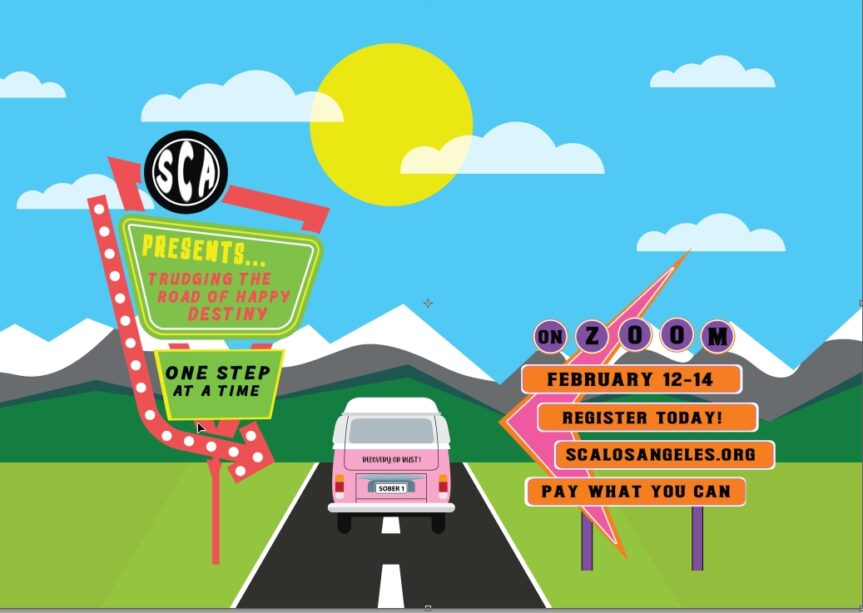
The 2021 Los Angeles Convention will take place via zoom on President’s Day weekend.

February 12th – 14th

The weekend will start with our Friday evening 6:30 meeting.

Saturday will include meetings, workshops and a zoom social.

Our weekend will conclude with our Sunday morning meeting.

The cost to attend the weekend events will be free.

More information will follow on our website.

www.scalosangeles.org/events/convention


2nd ISO Zoom room added

SCA is here to support you and has added a second ISO Zoom room, which will be available exclusively for SCA recovery meetings. The recording system has been disabled for the new room. Therefore, SCA should not hold any of its business meetings on this channel.

Please be aware that this room was created specifically to enable new meetings to access Zoom, wherever they happen to be. If you or someone you know wants to start a new meeting, it is very important that they contact Gary S., the Inreach Chair at sca.iso.inreach@gmail.com to coordinate meeting times, and to allow us to list the meeting on our international website. 

October 2020 ISO Conference

The ISO has voted to conduct a special conference entirely on the Zoom platform on Saturday, October 24th, 2020 Noon – 5pm, and Sunday Noon-4pm [Note: all times are EDT= GMT- 4:00].
The primary focus of this conference is to consider specific pieces of new literature and other items of SCA business.

Please e-mail me at sca.iso.inreach@gmail.com for the Zoom meeting ID (phone access code) and password.

Now Available for Review

New SCA Conditionally Approved Literature

“The Promises” has now been printed and is being distributed to various intergroups, meetings and individuals. Members are encouraged to read it and make comments and suggestions for the Literature Development Committee to consider and/or incorporate into their recommendations for ISO approval.

Please submit your suggestions to the  following address: iso-lit-comments@sca-recovery.org.

Also let David N. know if you need additional copies mailed to you: davidn4sca@gmail.com